


If you’ve been told that owning a south-facing house means constant struggle with Vastu imbalance, excessive heat, or negative energy, it’s time to set the record straight. The anxiety around south-facing houses, good or bad, often stems from outdated assumptions rather than practical design intelligence.
The truth is simpler: a south-facing house isn’t inherently problematic. What matters is how you plan the layout, manage light and ventilation, and align functional design with Vastu principles.
This guide walks through the core elements of a Vastu plan for a south-facing house, helping you understand where key spaces should go, why those placements matter, and how modern design can support both Vastu harmony and everyday comfort.
Vastu isn’t about rigid rules. It’s about creating spatial harmony that supports wellbeing. For a south-facing house, the principle revolves around balancing the sun’s intensity, managing heat gain, and ensuring energy flows smoothly through the home without stagnation or overwhelm.
The southern direction is associated with fire energy in Vastu, which is why thoughtful planning becomes essential. When spaces are placed correctly, that energy feels warm and welcoming rather than harsh or draining. When ignored, it can lead to discomfort, both physically (through excessive heat) and energetically (through poor circulation and imbalanced zones).
But here’s what often gets missed: Vastu principles about the south direction align closely with practical design logic. Placing bedrooms away from harsh afternoon sun isn’t just Vastu guidance, it’s sensible planning.
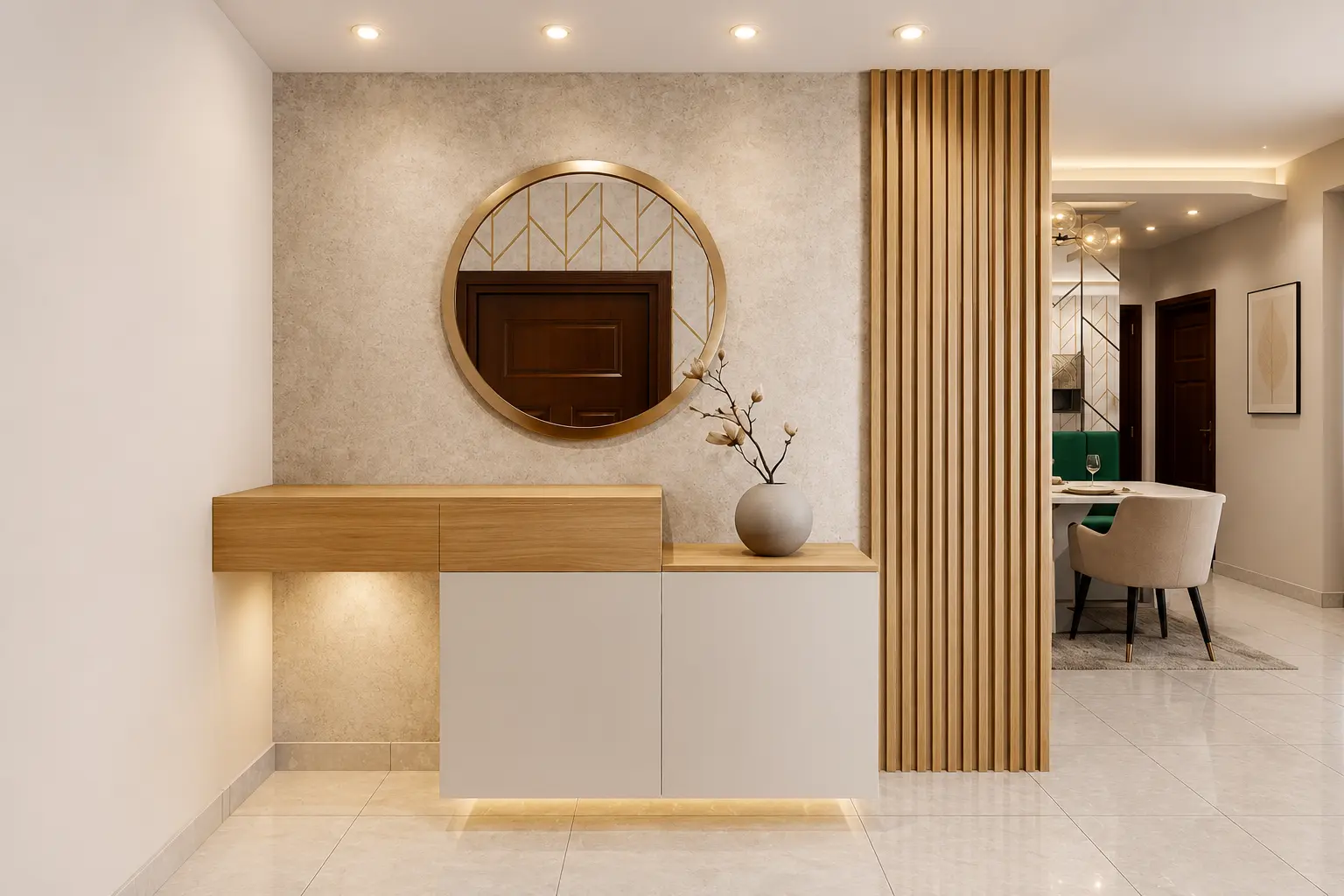
The main entrance is where energy enters your home, and maintaining Vastu for a south-facing entrance requires careful positioning. Ideally, the main door should be placed in the fourth pada (segment) of the southern wall, which falls slightly towards the southeast corner. This positioning balances the intensity of southern fire energy while maintaining an inviting entry.
If your apartment already has a fixed entrance that doesn’t align perfectly, don’t panic. Modern Vastu adjustments for south-facing main doors focus on how the entryway feels rather than just where it sits. A well-lit threshold, a clean and uncluttered entry zone, and a sense of openness as you step inside can offset placement concerns.
In a south-facing house, the kitchen ideally belongs in the southeast corner, which aligns with the fire element. This placement isn’t arbitrary. Positioning the cooking zone in the southeast means morning light enters naturally, ventilation remains strong, and the space doesn’t overheat during peak afternoon hours when the southern wall absorbs maximum sun.
If your kitchen sits elsewhere due to existing plumbing or structural constraints, your south-facing house can still be optimised. Focus on where the stove is placed. The cook should ideally face east while preparing meals, which means the cooking platform should be along the eastern wall of the kitchen. This allows for a calm, grounded cooking experience and keeps fire energy balanced.
Heat management becomes critical in a south-facing house, especially in cities like Mumbai and Bangalore. You can also use light-coloured cabinetry and countertops to reflect rather than absorb heat.
Bedrooms in a south-facing house benefit from being positioned away from the intense southern exposure. The southwest zone is traditionally considered ideal for the master bedroom, offering stability, grounding energy, and cooler conditions since it avoids the direct afternoon sun.
For the bedroom in a south-facing house, the bed itself should be placed with the headboard against the southern or western wall, allowing you to sleep with your head pointing south or west. This positioning supports restful sleep and aligns with natural magnetic fields, which is both a Vastu principle and a subtle factor in sleep quality.
Children’s bedrooms work well in the northwest or west zones, where energy feels lighter and more active without being overstimulating. Guest rooms can occupy the northwest as well, since this area supports temporary stays rather than long-term grounding.
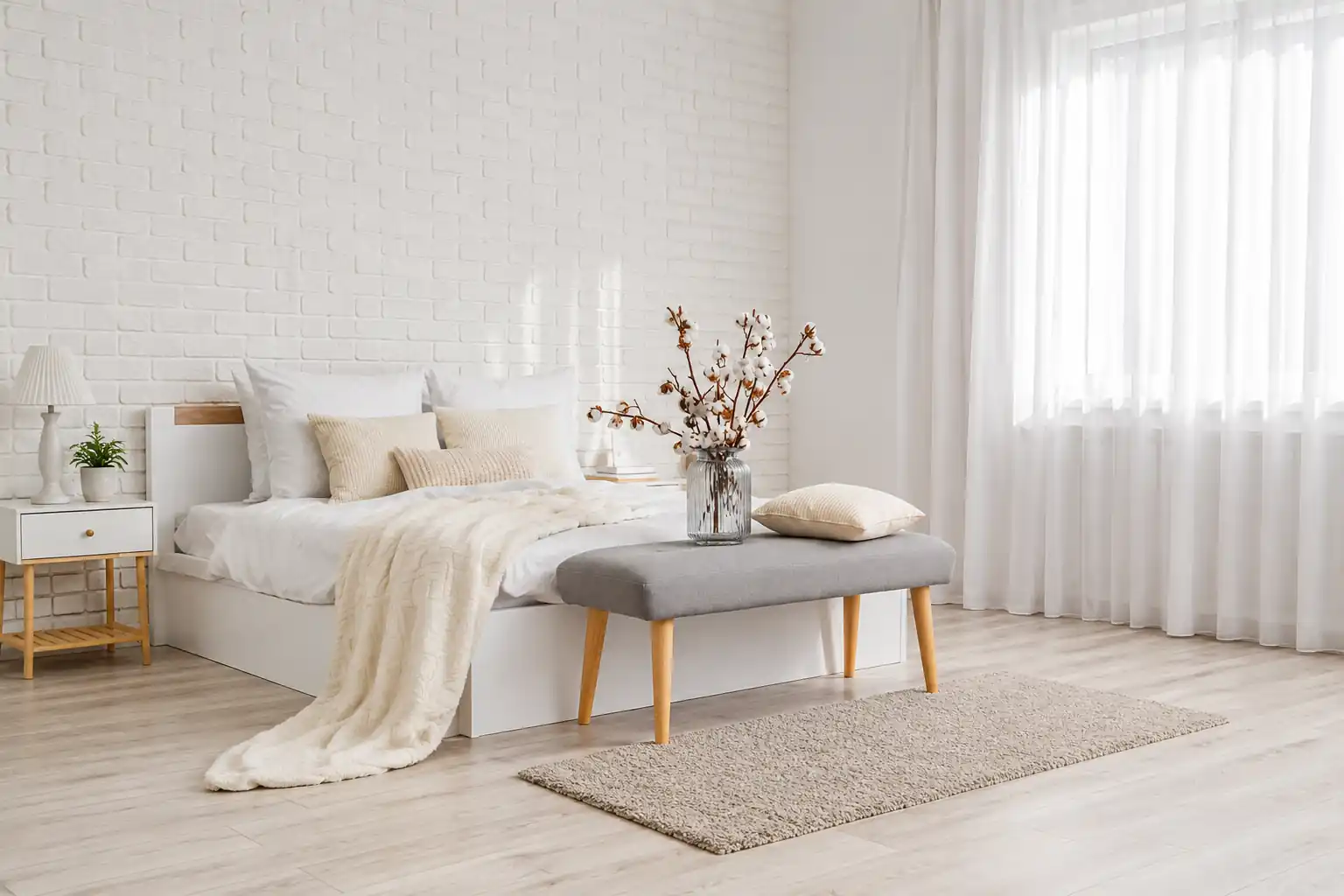
In practical terms, bedroom comfort in a south-facing house depends heavily on managing light and temperature. Use blackout or thermal curtains on southern windows to control heat gain during the day.
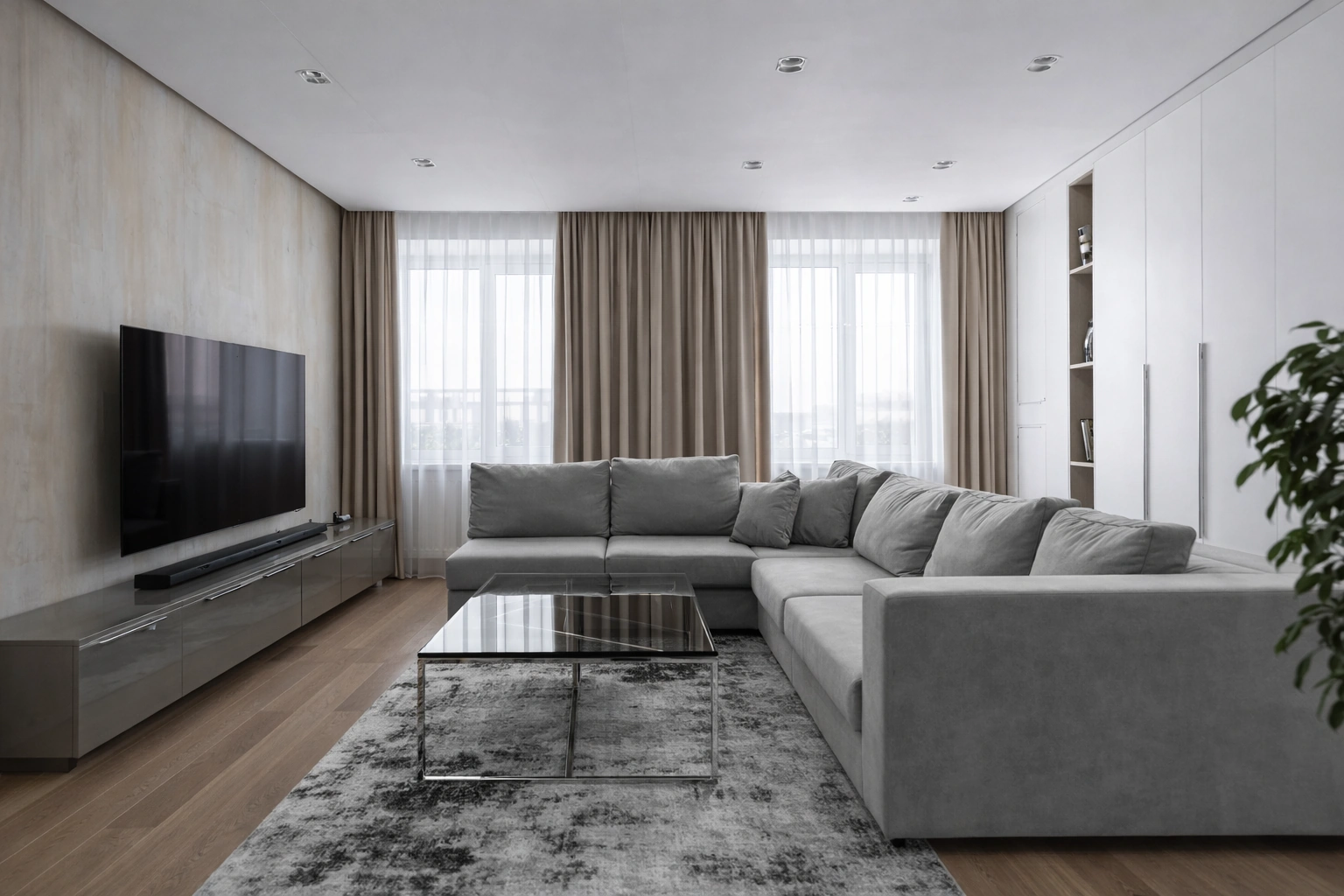
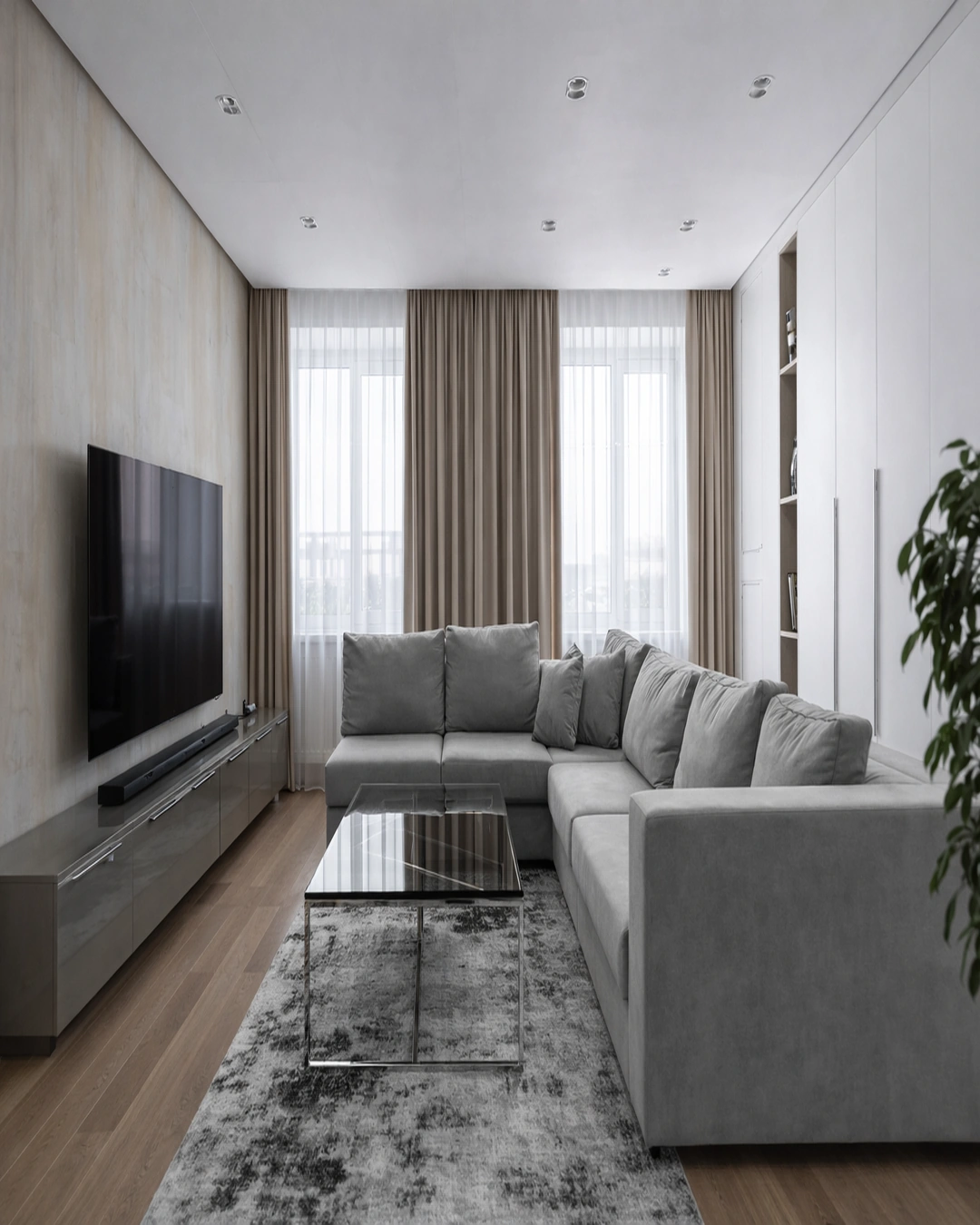
The living room in a south-facing house typically works best in the north or east zones, where natural light enters gently and circulation feels open. However, many apartments have living areas that face south, especially in compact layouts where zoning options are limited.
For the living room, the key is managing how furniture is arranged and the way energy moves through the space. Seating should be positioned so that family members face north or east while sitting, which creates a sense of calm and openness during conversations. Avoid placing heavy furniture like large sofas directly against the southern wall, as this can block energy flow and make the room feel heavier.
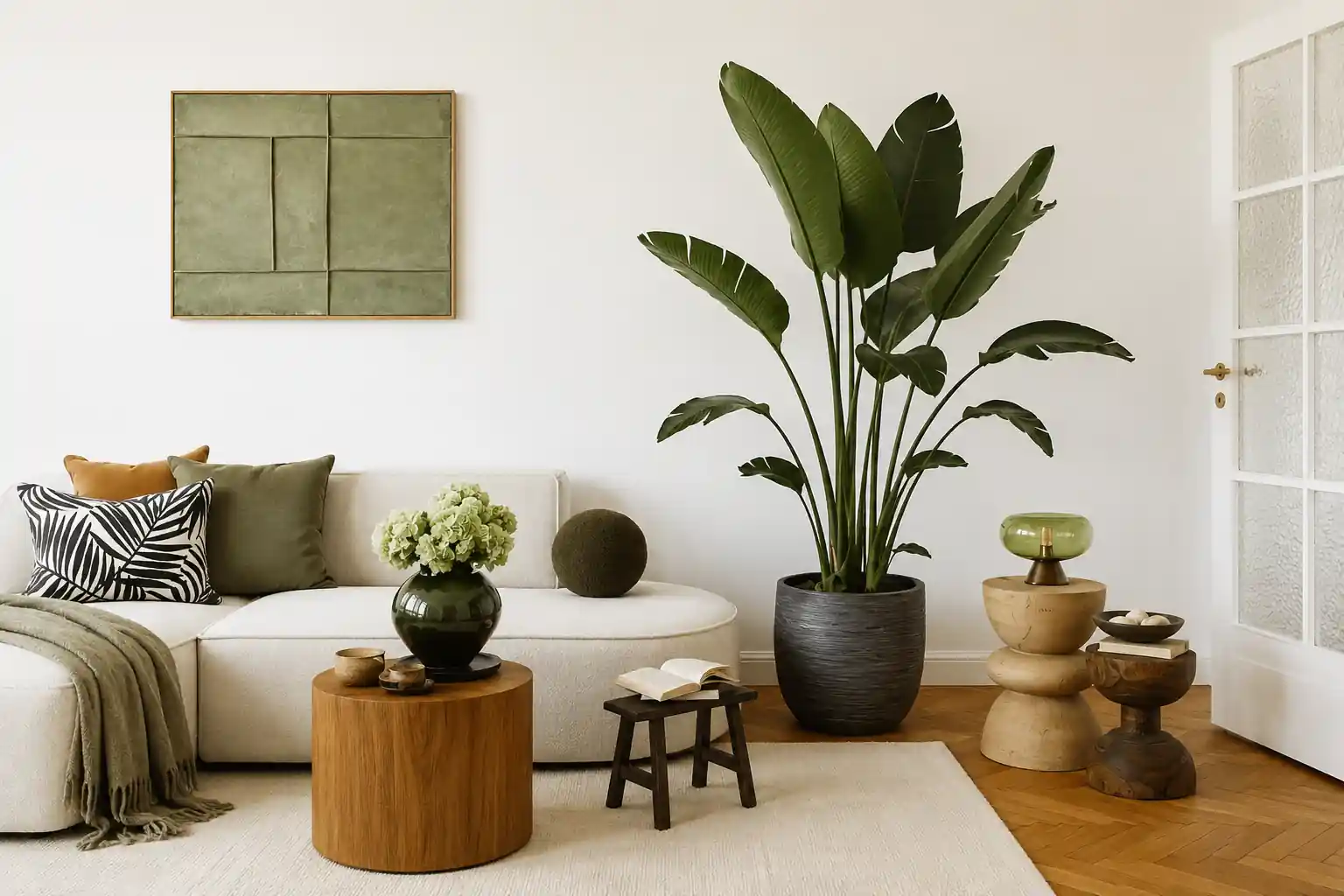
Instead, keep the southern zone lighter with open shelving, plants, or low-profile storage. Use the northern and eastern walls for primary seating arrangements, and ensure pathways remain clear so movement through the room feels effortless.
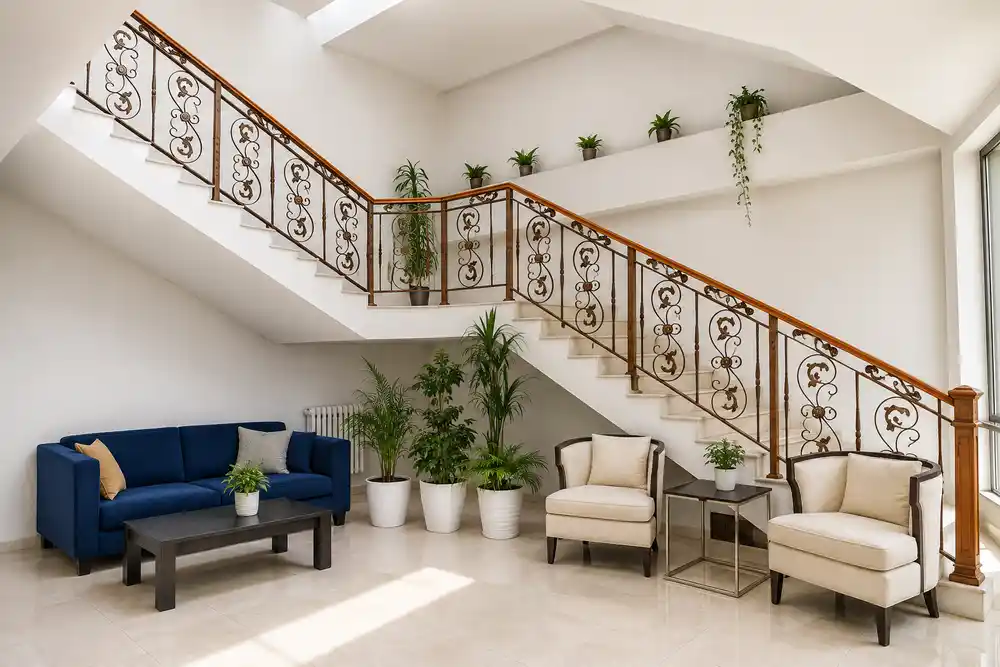
If your south-facing house has multiple levels, Vastu suggests placing the staircase in the south, southwest, or west zones. This positioning keeps the heavier structural element away from the lighter, more open zones in the north and east, supporting smoother energy flow throughout the home.
Staircases should ideally turn clockwise as you ascend, which aligns with natural movement patterns and Vastu principles. If your staircase already exists in a different orientation, focus on keeping it well-lit and uncluttered. Avoid using the space under the stairs for heavy storage or closed-off areas, as this can create stagnation.
Strategically placed mirrors can help redirect light and create a sense of openness in compact zones. Avoid placing mirrors directly opposite main doors or beds, but use them on side walls to expand visual space and improve circulation.
Adequate artificial lighting compensates for zones that don’t receive natural light. Use warm, soft lighting in bedrooms and living areas, and brighter task lighting in kitchens and workspaces.
At Bonito Designs, we approach a south-facing house’s Vastu plan through our LifeDesign philosophy, which looks beyond directions and rules to understand how families actually live in their homes. Instead of applying Vastu in isolation, we integrate it with layout planning, circulation, light management, and daily routines, ensuring spaces feel balanced without compromising comfort or usability.
With complete in-house execution, our design intent is carried through every stage of construction. ISO-certified processes and structured quality checks ensure that finishes, materials, and detailing hold up to everyday living, not just visual appeal. Our experience across city apartments in urban centres like Mumbai and Bangalore allows us to adapt Vastu principles to fixed layouts, compact footprints, and climate realities, creating homes that feel harmonious, practical, and built to last.
A south-facing house isn’t a challenge to overcome. With thoughtful planning, smart material choices, and a clear understanding of both Vastu principles and functional design, it becomes a home that supports your wellbeing, comfort, and peace of mind.
If you’re ready to explore how your south-facing home can be designed with balance and intention, book a consultation with Bonito Designs. Let’s create a space that feels energetically right and beautifully lived in.